How to host Good Day / Bad Day
A card game for a team on a video call. One player secretly ranks five cards, everyone else guesses their ranking, and then the story comes out one card at a time.

- Players
- 2–30 people, best with 4–14
- Time
- About 3 minutes a round; everyone in the spotlight once takes 20–40 minutes
- You need
- A laptop or phone for everyone, a video call, and the invite link
How it works
Each round, one player takes the spotlight. They flip a coin for a
good day (☀️, lucky breaks) or a bad day (⛈️, small disasters),
and five cards are dealt. The spotlight secretly ranks them 1 to 5: on a
good day, 5 is the best thing that could happen to them. Everyone else
guesses how the spotlight ranked them.
Then the spotlight flips the cards one at a time, out loud on the call,
and tells everyone why. That story is the game. Points are just the
excuse: one point for every card you matched, plus whatever the bonus wheel
promised that round.
Before the call
There are no practice bots, so a game needs at least two people. Open the
game in two browser windows (or on your laptop and your phone), make a room
in one, join it from the other, and play a round against yourself. It
takes five minutes and you’ll know every button.
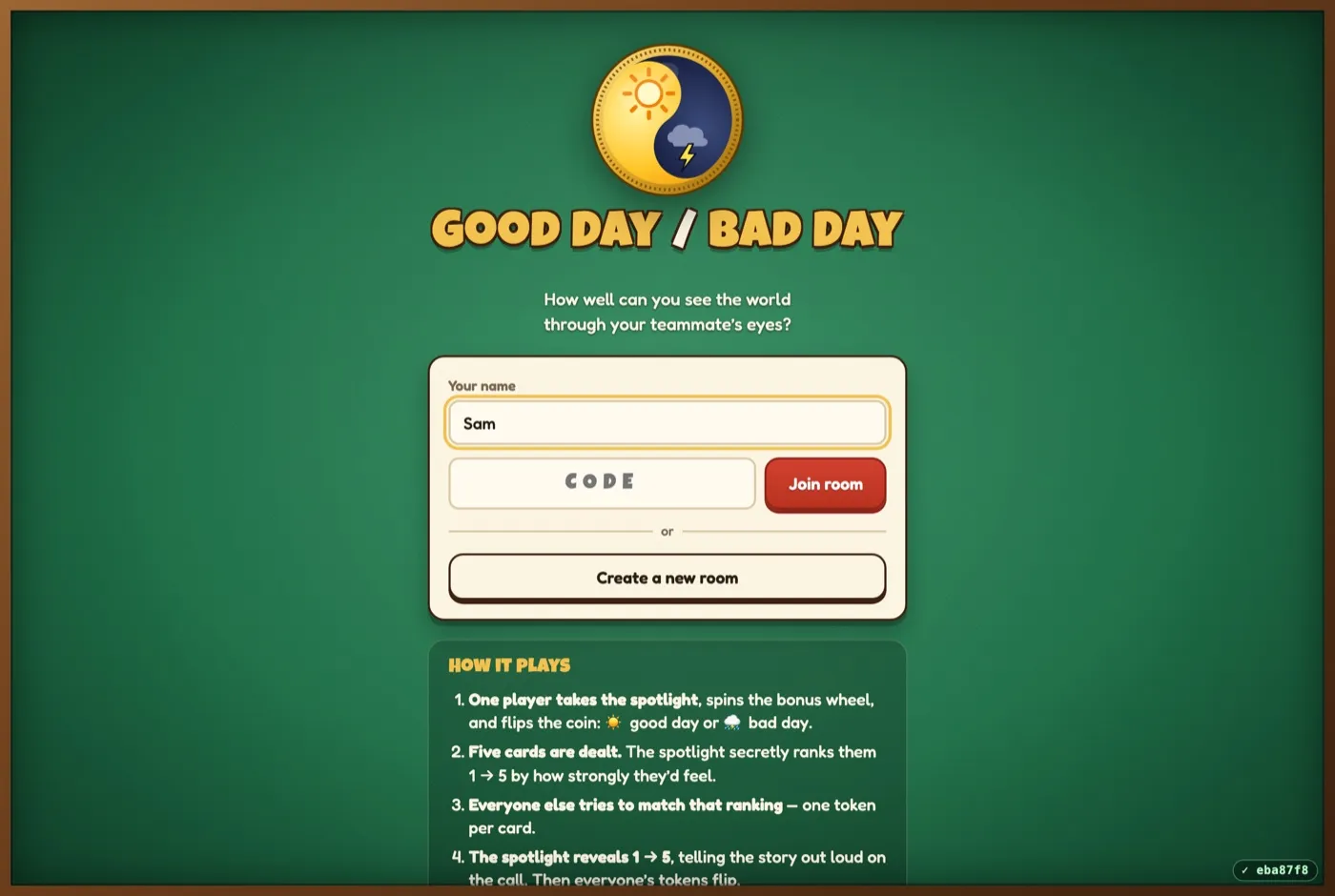
1. Create a room
Open the game, type your name, and click Create a new room. Whoever
creates the room is the host: you pick the settings and move the game
along between rounds. You play too.
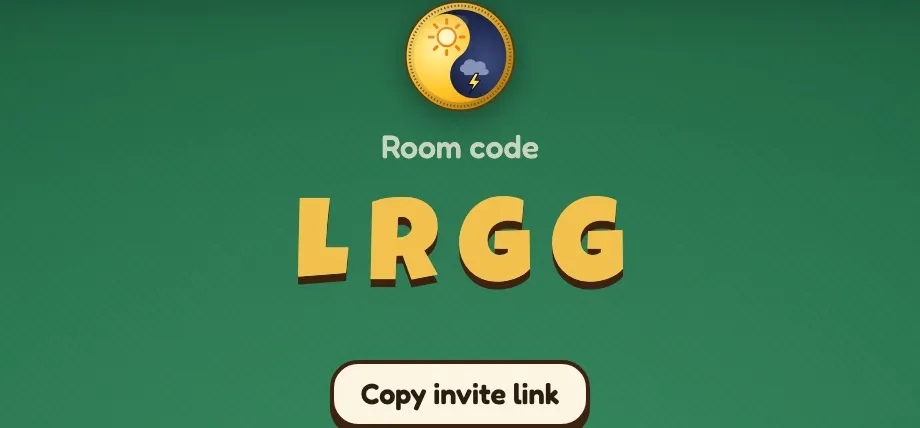
2. Invite everyone
Click Copy invite link and paste it into the call chat. Anyone who
clicks it lands on your room with the code filled in. They type their name
and click Join room. Laptops and phones both work. Anyone without the
link can type the four-letter room code on the home screen.
Wait until everyone is in. The room locks once the game starts, so
latecomers can’t join until the next game.
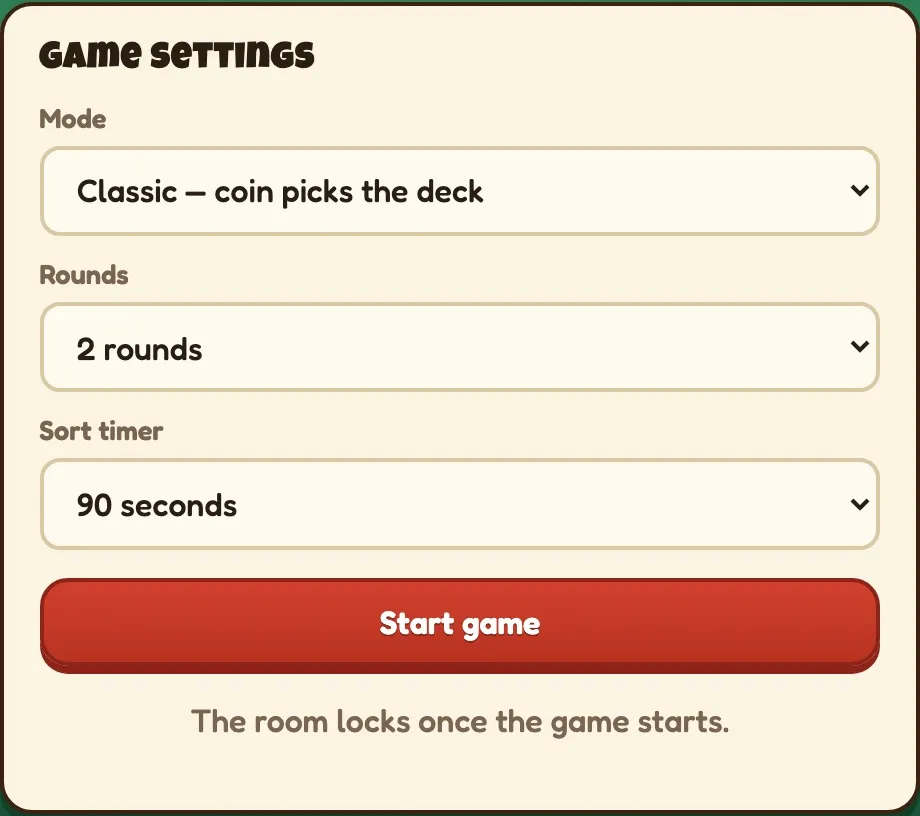
3. Pick the settings and start
- Mode: Classic is the one to start with: the coin picks a good
day or a bad day, and all five cards come from that deck. Mixed
shuffles good and bad cards together, and the spotlight decides which
way to sort. - Rounds: Full rotation gives everyone one turn in the spotlight.
With a big group, pick a number of rounds instead. - Sort timer: how long people have to place their guesses. 90 seconds
is plenty.
Click Start game.
4. Who goes first
A wheel spins to pick the first player in the spotlight. After that, the
spotlight moves around the table.
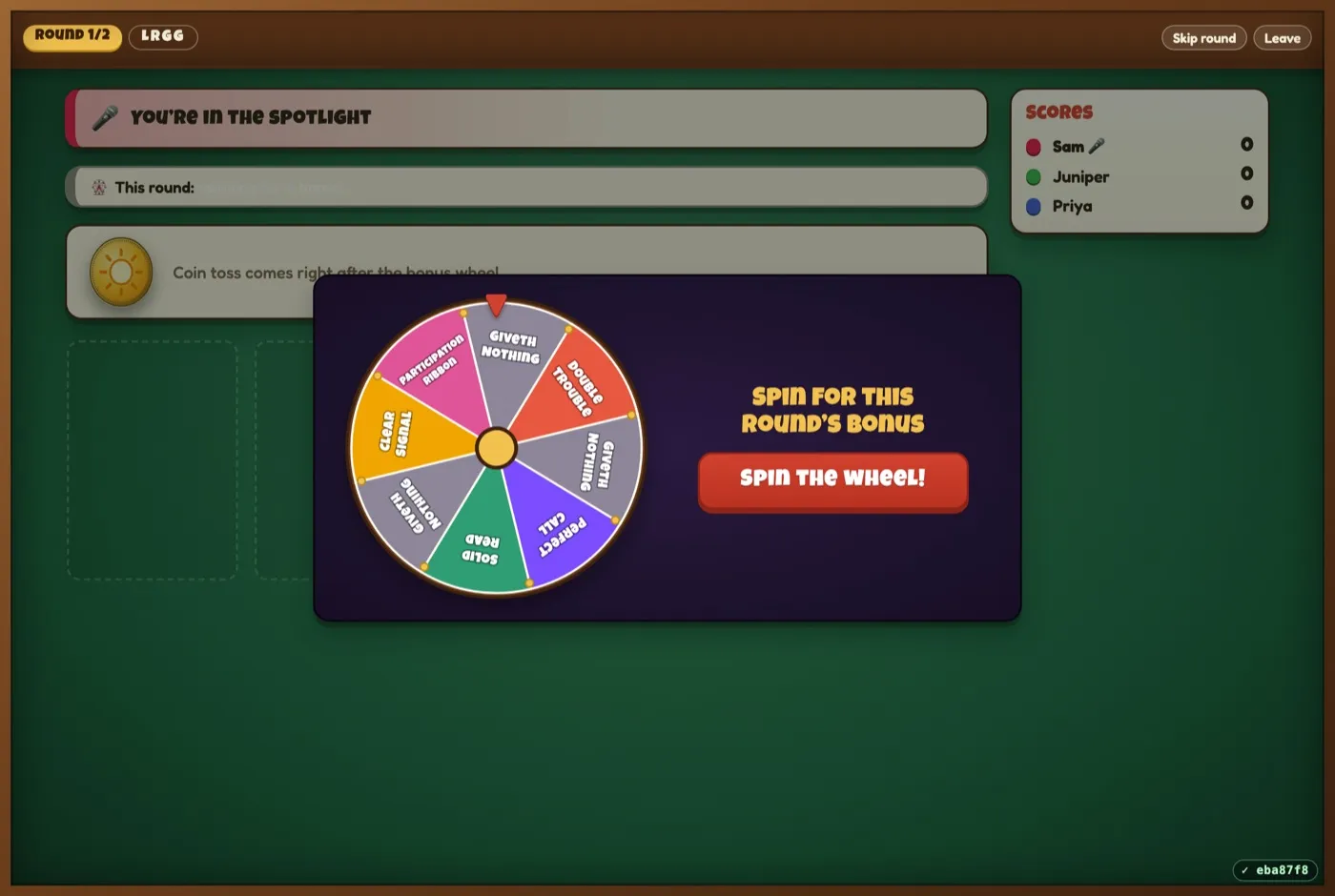
5. The bonus wheel
The spotlight spins the bonus wheel for the round: Double Trouble
(points ×2), Perfect Call (+3 for a 5/5 read), Solid Read (+1 for
3 or more matches), Clear Signal (the spotlight gets +2 if the table
reads them well), Participation Ribbon (+1 to everyone), or The Wheel
Giveth Nothing.
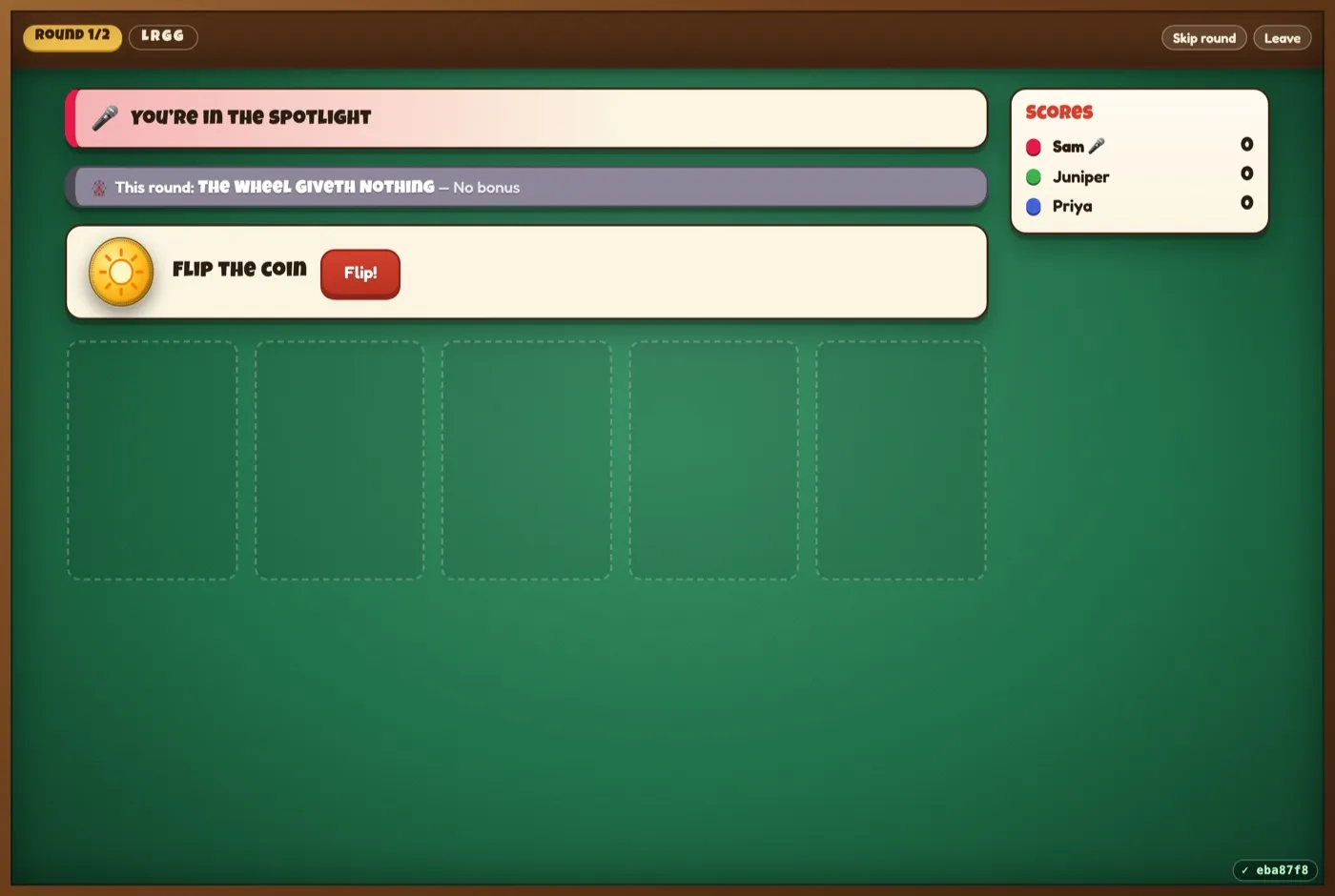
6. Flip the coin
The spotlight clicks Flip! Sun is a good day, storm is a bad day. The
bar across the top says which way to sort.
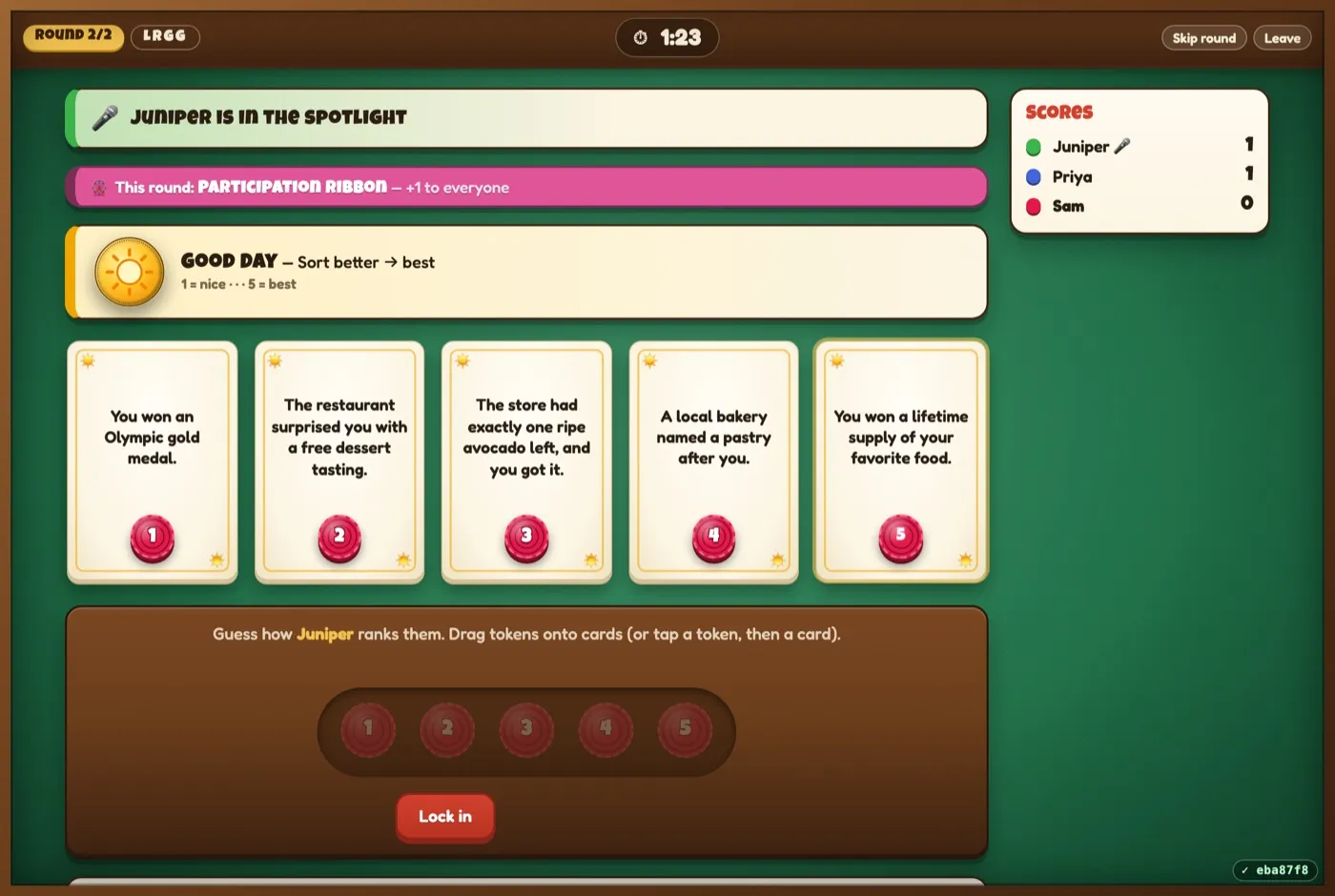
7. Everyone sorts
Five cards are dealt. The spotlight ranks them their own way: that’s the
answer key. Everyone else guesses the spotlight’s ranking. Drag the
numbered tokens onto the cards (or tap a token, then a card), then click
Lock in. The timer at the top counts down, and you can see who has
locked in.
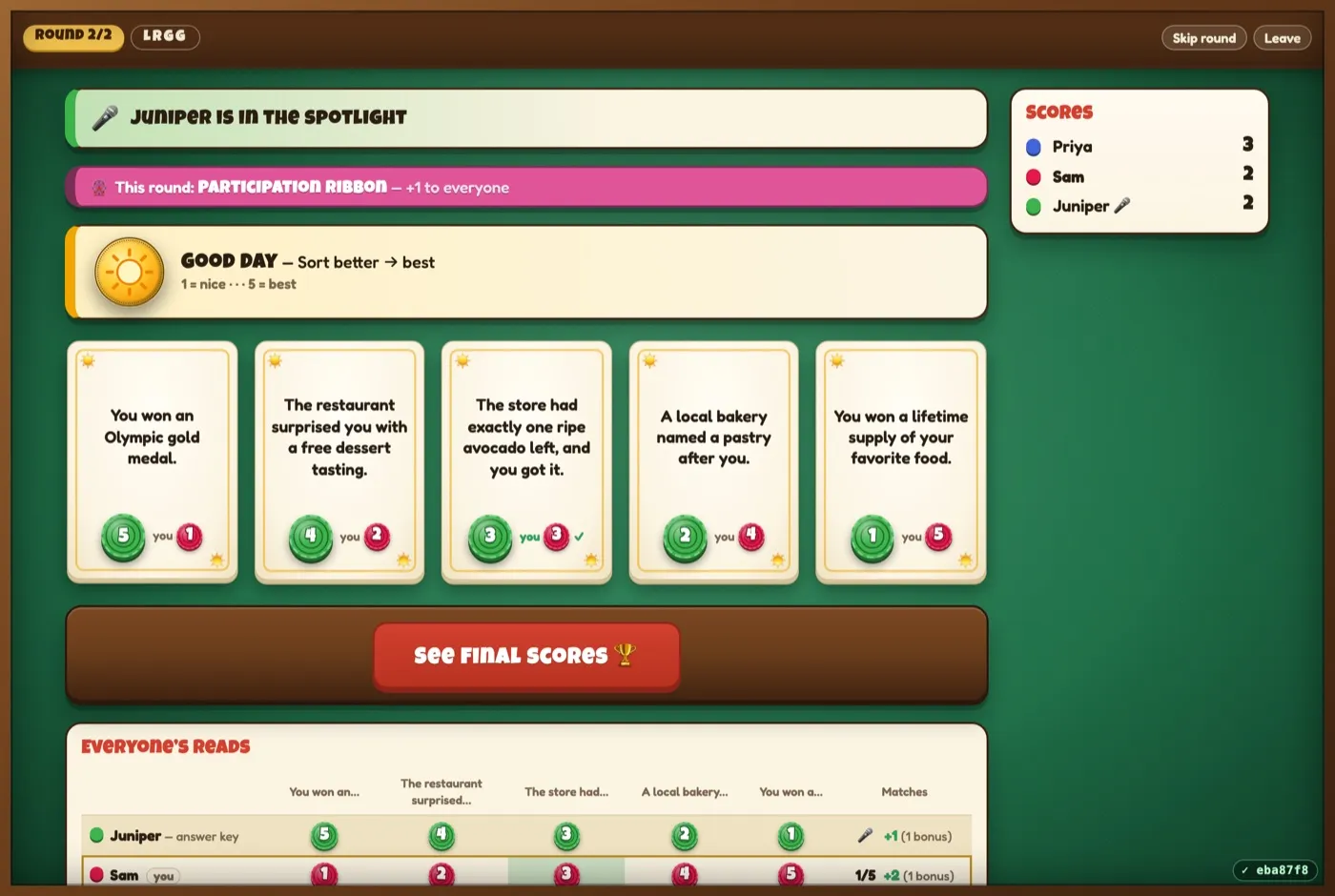
8. The reveal
This is the part to slow down for. The spotlight flips the cards one at a
time, in any order, and tells the story behind each one on the call. Every
flip shows each player their own guess beside the answer. When all five
are up, the
Everyone’s reads table shows who matched what, and the scores update.
Then you click Next round → to hand the spotlight to the next player.
9. Final scores
After the last round, click See final scores 🏆. Play again takes
the same room back to the lobby, with everyone still in it.
Tips for a good game
- The story is the point. Ask the spotlight a follow-up question or
two. “Wait, why is the avocado above the gold medal?” is the best
moment of the round. - Somebody dropped? If the spotlight disconnects, you can act for them
or click Skip round at the top. Anyone who drops can open the same
link again and click Rejoin room. - Keep a game short with a big group: pick 6 or 8 rounds instead of a
full rotation, and play again another day.
What worked, what fell flat, what broke, what you wished it did. Every note helps.